Warmth where you want it: fireplaces, heaters, fire pits and the burner outside
What a watt buys indoors, what a BTU buys outdoors, why the 1,500 watt ceiling exists, and the safety numbers behind every machine on the warm half of the range.
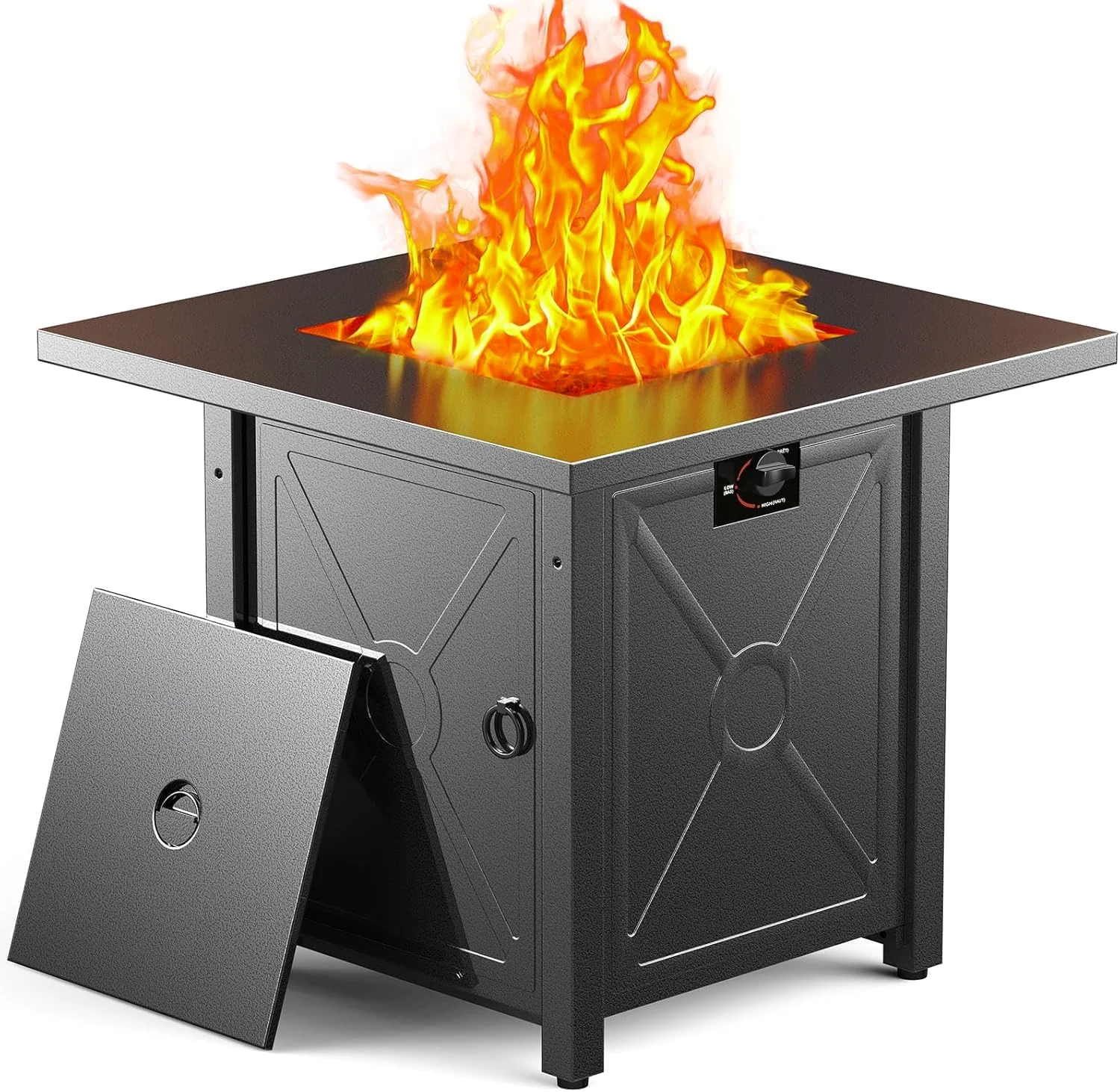
The warm half of our catalogue divides neatly along one line: indoors runs on electricity and is rated in watts, outdoors runs on propane and is rated in BTU. Almost every practical decision about heating a room or a patio follows from understanding what those two numbers can and cannot buy you.
The warm side runs from the living room wall out to the patio: what an electric fireplace actually does, why every plug-in heater in the country stops at the same number, what a fire pit is for, and how many burners a grill really needs. Safety runs through all of it, because heating equipment is the one category of household machine where the statistics are genuinely sobering.
The 1,500 watt ceiling, and why every heater has it
Look along a shelf of plug-in heaters and you will notice something odd: they nearly all stop at 1,500 watts. Ours do too. It is not a coincidence and it is not marketing. A standard household circuit in the United States is 15 amps at 120 volts, which is 1,800 watts of headroom in total, and the convention is to load a circuit to no more than 80 per cent of its rating for anything that runs continuously. Eighty per cent of 1,800 is 1,440, and 1,500 watts is the practical ceiling that manufacturers settle on.
That number sets a hard limit on what any plug-in heater can do. 1,500 watts is about 5,100 BTU per hour of heat, and no amount of clever engineering changes it: a fan heater, an oil column, an infrared panel and an electric fireplace pulling the same wattage all put the same amount of heat into a room. What differs is how the heat is delivered, how it feels, and how quickly you notice it.
Every plug-in heater drawing 1,500 watts puts the same heat into a room. What you are choosing between is how that heat arrives, not how much of it there is.
The practical consequence: a single plug-in heater is a spot heater, not a central heating system. Five thousand BTU will take the edge off a bedroom or make one end of a large room comfortable. It will not heat a house, and a second heater on the same circuit will trip the breaker.
It also means one rule matters more than any other. Never run a heater from an extension lead or a power strip. The heater draws close to the full rating of the circuit continuously, and a thin extension cord or a strip designed for electronics is the part of that chain that gets hot. Straight into a wall socket, every time.
The numbers that justify all the fuss
It is easy to read safety advice as boilerplate. These figures are why it is not. Fire departments in the United States answered an average of 37,365 fires involving heating equipment each year between 2020 and 2024. Those fires caused an annual average of 417 civilian deaths, 1,260 injuries and 1.2 billion dollars in property damage.
Within that, the split is stark. Space heaters and heating stoves accounted for about 30 per cent of the fires but more than 70 per cent of the deaths and injuries. A portable heater is not more likely to start a fire than a furnace. It is far more likely to start one in a room where somebody is asleep.
Nearly half of those fires happened in December, January and February, which is the least surprising statistic in the set and the most useful one: the risk is concentrated in exactly the weeks when the machine gets used hardest.
The rule that addresses most of it is a distance. Keep anything that burns at least three feet from a heater in every direction: bedding, curtains, a laundry rack, a sofa arm, a stack of paper. Our ceramic heaters have tip-over cutouts and overheat protection, and both are worth having, but neither of them moves a duvet.
Four rules for anything with an element in it
Three feet of clear space in every direction. Straight into a wall socket, never an extension lead or a power strip. Off when the room is empty and off before bed unless the machine is designed to run unattended. And a working smoke alarm on the same floor, tested at the start of the season rather than at the end of it.
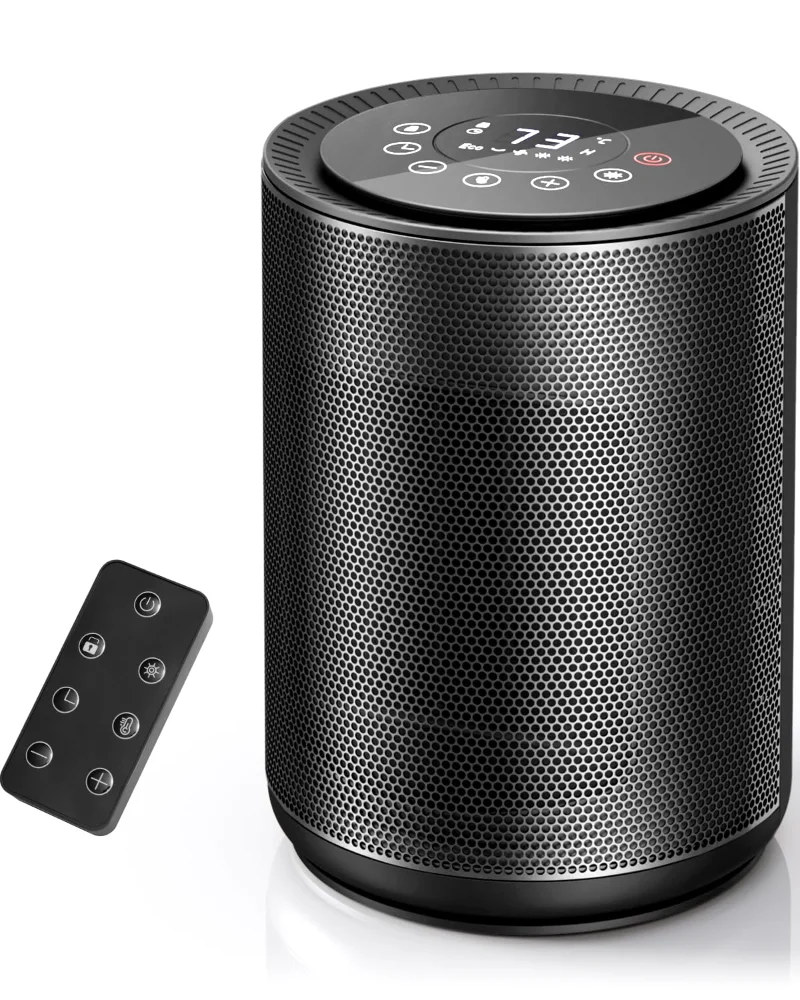
Space Heater, 1,500 W, Black
A 1,500 watt ceramic heater with a thermostat, a remote and a child lock, which is the combination that makes a spot heater sensible in a room with a door people leave open. The thermostat is the part that saves money: a heater that cycles costs less to run than one that sits on full.

What an electric fireplace is actually doing
An electric fireplace is two machines in one housing that most people buy for only one of them. There is a heater, subject to the same 1,500 watt ceiling as everything else, and there is a flame effect, which draws a few watts and produces no heat at all. The two run independently. Ours will show flames all summer with the heat switched off, which is how a good many of them get used.
That separation is the reason to buy one. A gas or wood fire gives you heat and flame as one package, and in a mild autumn that package is too much. An electric unit lets you have the room look warm in October and be warm in January.
The formats differ by where they sit rather than by what they do.
- Recessed and wall-mounted inserts, from 30 to 60 inches wide. These go into a stud wall or hang flat on it, and they read as architecture rather than as an appliance. Ours are the ultra-thin kind, which matters when the wall is a partition rather than a chimney breast.
- Free-standing fireplace stoves, 15 and 24 inches, shaped like a cast-iron stove with a glass door. They plug in and stand on the floor, so nothing is fixed and nothing is drilled, and they suit a rented room or a corner that has no wall to give.
- Fireplace TV stands, 50 and 59 inches. A media unit with the fire built into the base, which solves the problem of a living room wall that has to hold both a television and a focal point.
Twelve flame colours is a specification that sounds like a gimmick and mostly is, but there is a real point buried in it: the two or three settings at the warm end of the range are the ones that look like fire, and being able to turn the brightness down to something plausible for a dark room is what separates a convincing unit from an ornament.
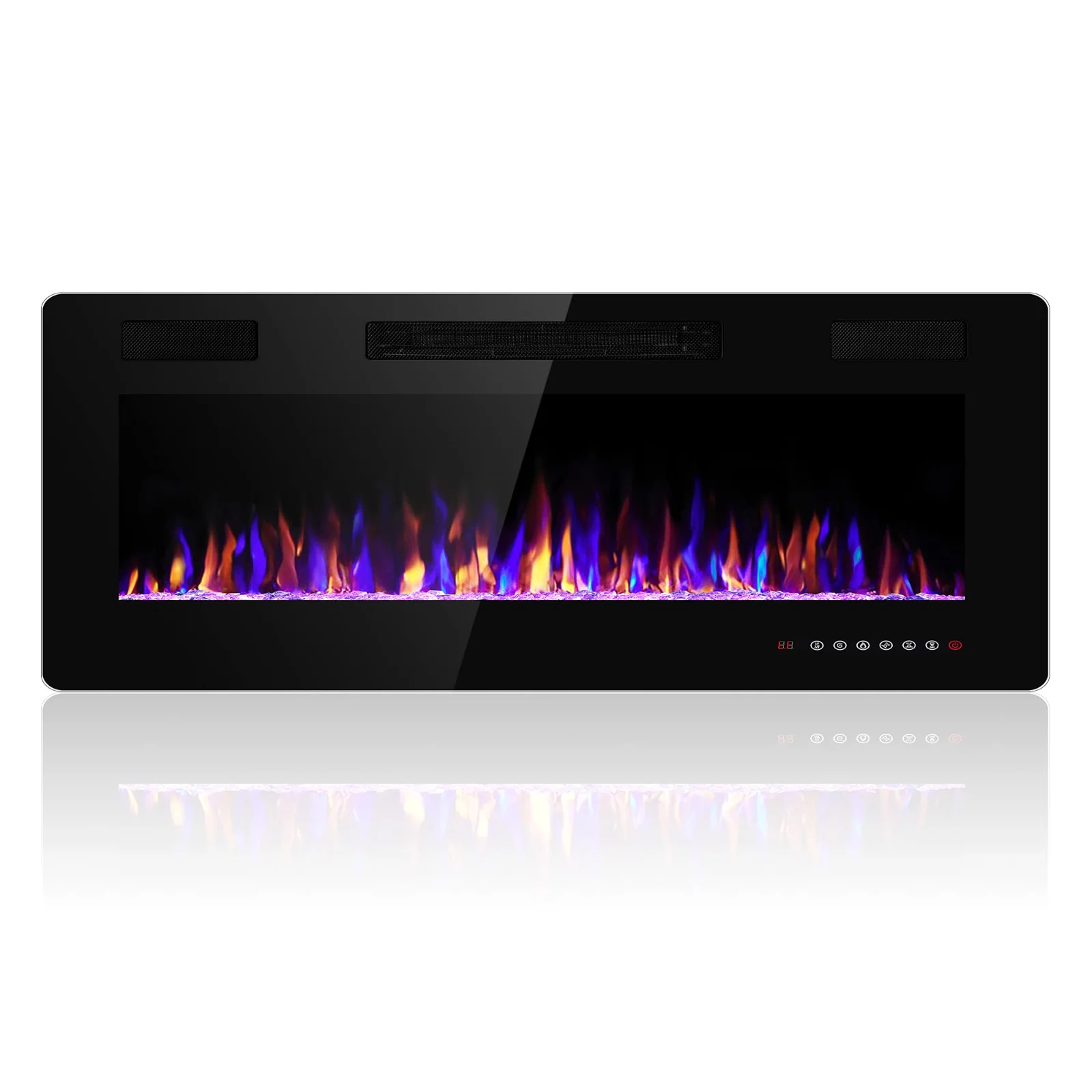
Electric Fireplace, 36 in, Black
A 36 inch ultra-thin insert that can be recessed into a wall or hung on it, with the heater and the flame on separate controls. This is the most-bought machine on our warm side, and the reason is the thinness: it fits a partition wall where a deeper unit will not.
| Machine | Draw | Heat produced | Cost per hour |
|---|---|---|---|
| Flame effect only, heater off | 10 to 50 W | None | Under a penny |
| Electric fireplace, low heat | 750 W | About 2,550 BTU/h | About 13 cents |
| Electric fireplace or heater, high | 1,500 W | About 5,100 BTU/h | About 26 cents |
| Tower fan, high | 45 W | None | Under a penny |
| Towel warmer, heating | 300 W | Warms two towels | About 5 cents |
Seventeen cents a kilowatt hour is used here only to make the comparison legible. Your own rate is on your bill and the arithmetic is the same. One watt-hour is 3.412 BTU.
Infrared, convection and fan heat: how the warmth arrives
If every 1,500 watt heater puts the same energy into a room, the only thing left to choose is delivery, and the three methods feel genuinely different.
Convection warms the air, which then warms you. It is even, it is slow, and it heats the whole room including the parts you are not sitting in. An oil column or a panel works this way. The room takes a while to come up and holds the warmth for a while after the machine goes off.
Fan-forced heat is convection with the wait taken out. A ceramic element and a fan push warm air across the room immediately. A small fan heater feels dramatic in the first two minutes and why it is the right machine for a bathroom or a study you only occupy for an hour. The cost is noise, and the fact that the warmth stops the moment the machine does.
Infrared skips the air. It radiates energy that warms surfaces and skin directly, the way sun through a window warms you on a cold day. Our free-standing fireplace stoves work this way, and the effect is that you feel warm within a few feet almost at once, even in a room whose air is still cold. In a large, draughty or high-ceilinged room, where warming all the air is a losing battle, that is a real advantage. Step out of the line of sight and the effect stops, which is the other half of the same property.
The choice, then, is a question about the room rather than about the machine. A small closed room that you sit in for hours suits convection. A room you dip into suits a fan. A big cold room, or one where you want to be warm in one chair rather than everywhere, suits infrared.
The small warm machines
Two machines on our warm side are not really about heating a room at all. A towel warmer holds two large bath towels at temperature in a bucket, which is a small luxury that costs about a nickel an hour to run and is genuinely useful in a bathroom that never quite dries out: a warm dry towel is a towel that is not growing anything. A food warming mat holds a buffet at serving temperature on a silicone surface with an adjustable setting, which is a different job from cooking and a much lower wattage.
Both belong to a category worth naming: machines that hold a temperature rather than reach one. They draw a fraction of what a heater draws because they are fighting nothing but the room.
Outside: what a BTU buys on a patio
Step outdoors and the numbers get an order of magnitude larger. Our propane fire pits are rated at 40,000 and 50,000 BTU per hour, which is roughly eight to ten times what the biggest plug-in heater indoors can manage. It has to be, because outdoors there is no room to heat. All you can do is throw radiant heat at the people sitting around the pit, and everything that misses them is gone.
That is the honest way to think about a fire pit: it is not a heater, it is a warm thing to sit around. Sitting three feet away you feel it clearly. Standing eight feet away in a breeze you do not. Buying a bigger BTU figure does not extend the circle very much, because radiant heat falls away with the square of the distance.
What a propane pit does buy you over a wood one is control and cleanliness. There is no smoke to move away from, no ash to shovel out, nothing that carries on burning after you go inside, and a lava rock bed that lights on a knob. Ours are the smokeless kind, in table and tabletop formats, with a lid and a cover so the pit can double as a patio table when it is not lit.
Propane Fire Pit, 40,000 BTU, Black
A 28 inch smokeless propane fire pit at 40,000 BTU, with lava rock, a lid and a waterproof cover. It runs on the same 20 pound tank as a grill, which is worth knowing if you already have a spare in the garage.
Grills: burners, area, and the number that actually matters
Gas grills are sold on two figures, total BTU and cooking area, and the useful measure is the ratio between them rather than either on its own. A grill with 40,000 BTU across 500 square inches of grate delivers 80 BTU per square inch, which is a sensible density for searing. The same 40,000 BTU spread over 800 square inches gets you a large grill that struggles to get properly hot. If a specification sheet gives you both numbers, divide.
Burner count is a different question and it is about control rather than power. Two burners let you have a hot side and a cool side, which is how anything thicker than a burger actually gets cooked: sear over direct heat, finish over indirect. Four burners let you do that and still have room to keep food warm. A side burner is for the pan of sauce or onions that would otherwise take you back into the kitchen halfway through.
Our grill shelf covers the range: tabletop two-burner units at 20,000 BTU for a balcony or a campsite, three and four burner carts with a side burner and porcelain-enamelled grates, and flat top griddles for the things that fall through a grate. A griddle is worth a thought if the food you actually cook outdoors is breakfast, smash burgers or anything with onions in it.
| If you want to | The machine | Typical figure in our range |
|---|---|---|
| Sit outside on an autumn evening | Propane fire pit | 40,000 to 50,000 BTU |
| Cook for two on a balcony | Tabletop gas grill | 2 burners, about 20,000 BTU |
| Cook for a family with hot and cool zones | 3 or 4 burner gas grill | 4 burners plus a side burner |
| Cook breakfast, smash burgers, onions | Flat top griddle | 2 or 3 burners, 18 to 23 inches |
| Give a tabletop griddle a home outdoors | Stainless griddle cart | Fits a 22 inch tabletop unit |
Cooking area is worth dividing into total BTU before comparing two grills: heat density is what sears, and a large cool grate is not a bargain.
Propane safety, in five minutes at the start of the season
The consumer safety commission publishes a pre-season check that takes five minutes and catches the failure that matters. Inspect the hose for cracking, brittleness and sharp bends, and replace it if there is any doubt. Then check for leaks: open the gas supply valve fully and brush a solution of soapy water onto the connection. If bubbles appear, there is a leak. Tighten the tank connection, and if that does not stop it, close the valve and have the grill looked at properly.
The second rule has no exceptions. Outdoors only, in a well-ventilated space. Never in a garage, a breezeway, a carport, a porch, or under anything that will burn. Gas and charcoal grills both carry a risk of carbon monoxide poisoning as well as fire, and the agency counted an estimated 3,800 grill-related injuries treated in emergency departments in a single year.
Carbon monoxide deserves its own paragraph because it is the hazard people underestimate. It has no colour and no smell, more than 200 people a year in the United States die of accidental non-fire carbon monoxide poisoning tied to consumer products, and the symptoms read like flu: headache, dizziness, weakness, nausea, sleepiness, confusion. Anything that burns fuel belongs outside, and a battery-backed alarm belongs on every level of a home.
None of our fuel-burning machines is an indoor machine
The fire pits, grills and griddles in our range burn propane and are built for outdoor use only. The electric fireplaces, stoves and heaters have no combustion at all and produce no carbon monoxide, which is exactly why they are the indoor half of this catalogue.
Choosing, in one page
- A cold bedroom or study. A 1,500 watt ceramic heater with a thermostat. Three feet clear, straight into the wall.
- A living room that needs a focal point. A recessed or wall-mounted electric fireplace. Flame without heat for eight months of the year, 5,100 BTU for the other four.
- A room with no wall to spare. A free-standing fireplace stove. Nothing fixed, nothing drilled.
- A television wall. A fireplace TV stand, which does both jobs with one piece of furniture.
- Evenings on a patio. A propane fire pit at 40,000 BTU and up, with a cover so it earns its footprint when unlit.
- Cooking outdoors for a family. A four burner grill with a side burner. For breakfast and smash burgers, a flat top griddle instead.
The indoor machines are all on the heaters and fireplaces shelf and the outdoor ones on the grills and fire pits shelf, each card carrying its output, its size and its finish. The cold half of the ELECTACTIC catalogue works the same way, which is the whole idea behind the scale on our front page.
The other two pieces
How much ice a house needs
Bullet, nugget, clear cube, sphere, crescent: five kinds of ice, five different machines, and the output rating a kitchen is actually asking for.
11 min read14 September 2026
Sizing a cooling machine
Window, saddle, portable or split, and how many BTU a room really needs. Why an oversized unit leaves a room clammy, when a fan is enough, and when the problem is damp rather than heat.
12 min read14 September 2026