Sizing a cooling machine for the room you actually have
Window, saddle, portable or split, and how many BTU a room really needs. Why an oversized unit leaves a room clammy, when a fan is enough, and when the problem is damp rather than heat.
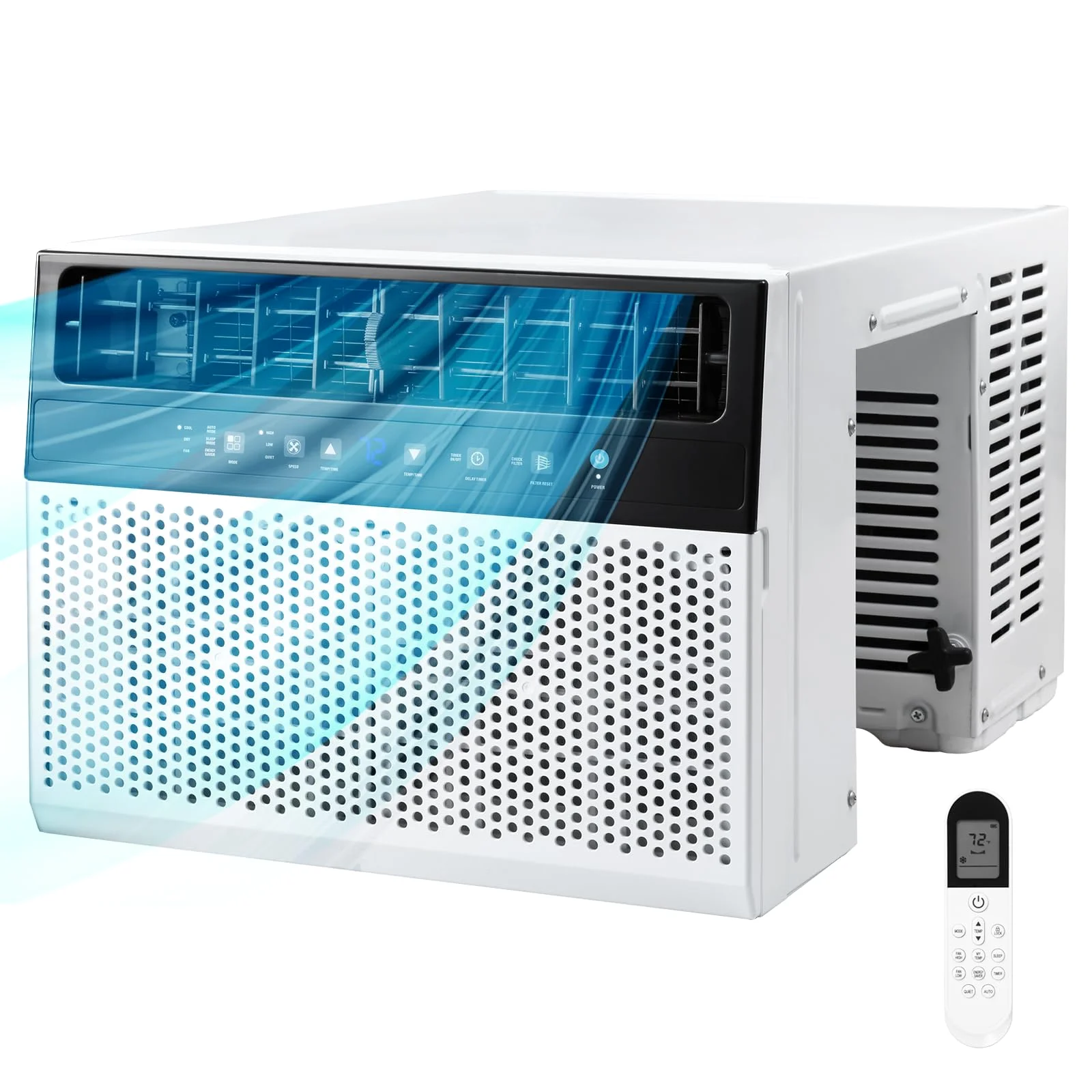
There is a particular kind of disappointment that comes from buying an air conditioner that is too big. The room goes cold in ten minutes, the unit stops, and half an hour later everything feels damp and slightly unpleasant, and nobody can say why. It is one of the few appliance problems where buying more capacity makes the result worse, so it is worth understanding before you spend the money.
Matching a machine to a room comes down to three things: how the capacity figure works, what the four kinds of unit are actually good at, and the two cases where the machine a room needs is not an air conditioner at all.
What a BTU figure means, and why bigger is worse
A BTU is a unit of heat. An air conditioner rated at 8,000 BTU can move eight thousand of them out of a room in an hour, which is all the figure claims. It says nothing about how well the machine will suit your room, because a room is not just a volume of air. It is a volume of air, plus sunlight through a window, plus a ceiling height, plus whatever a kitchen or a computer is adding.
ENERGY STAR publishes a sizing table that starts at 5,000 BTU for a room of 100 to 150 square feet and works upward, calculated on an eight foot ceiling. Their guidance is blunt about the direction of the error: the most efficient unit is the one sized to the space, and bigger is not better.
The reason an oversized unit fails is worth spelling out, because it is the opposite of intuition. An air conditioner does two jobs at once. It drops the air temperature, and it pulls water out of the air onto its cold coil, where the water runs off and drains away. Removing the water takes time. A unit that is too powerful hits the thermostat setting quickly and shuts off, so the coil never runs long enough for much water to condense and drain. Worse, when it stops, water still clinging to the coil evaporates straight back into the room. The result is a room that is cool and damp, which is the sensation people describe as clammy, and damp air is what mould needs.
An air conditioner has two jobs. Oversize it and it finishes the first one so fast that it never gets round to the second.
The practical rule that falls out of this: buy to the table, and adjust for the room rather than for ambition. A room with a large south-facing window, or a kitchen, or a room with more than two people in it regularly, justifies a step up. A shaded north-facing bedroom does not.
| Room | Typical capacity | What we make for it |
|---|---|---|
| Up to about 150 sq ft: small bedroom, study | 5,000 BTU | A 5,000 BTU window unit |
| 150 to 350 sq ft: bedroom, home office | 7,000 to 8,000 BTU | Window and portable units at 7,000 and 8,000 BTU |
| 350 to 450 sq ft: large bedroom, open living room | 10,000 BTU | A 10,000 BTU portable, or a saddle unit |
| 450 to 550 sq ft: living room, studio flat | 12,000 BTU | A 12,000 BTU window unit |
| A whole room you want cooled and heated | 9,000 to 18,000 BTU | Wall-mounted split systems at 9,000 and 18,000 BTU |
Capacities follow the published sizing guidance for an eight foot ceiling. Add capacity for heavy sun, a kitchen, or a room that is regularly full of people.
Four ways to put cold air in a room
Every one of these machines works the same way inside. A compressor moves refrigerant, a cold coil takes heat out of the room, a hot coil dumps it somewhere else. The difference between them is entirely about where that somewhere else is, and what you have to give up to get the heat there.
The window unit
The oldest arrangement and still the most efficient one. The machine sits half in and half out of the window, cold coil indoors, hot coil outdoors, nothing in between. Nothing is lost to a hose and nothing warm is sitting in the room. A window unit of a given rating will out-cool a portable of the same rating, every time.
What you give up is the window. The sash sits on top of the unit, the view is gone for the season, and installation means brackets and a seal. Ours run from 5,000 BTU up to 12,000.
The saddle unit
A newer shape, and the one that solves the window problem. A saddle unit straddles the sill in a U, so the sash closes down into the notch between the indoor and outdoor halves. You keep most of the glass, you keep the view, and the closed sash sits between the compressor and the room. Indoors they are noticeably quieter than a conventional window unit. Ours cool up to 450 square feet.
The catch is the window itself. A saddle unit needs a single-hung or double-hung sash that slides vertically, and it needs the sill depth to sit on. Casement windows are out.
The portable unit
A box on castors with a hose to the window. It goes anywhere, it comes with you when you move, and installation is a window kit rather than a bracket. For rented flats, awkward windows and rooms you only need to cool sometimes, it is often the only option, and our range covers 7,000 to 14,000 BTU.
It also has a physical handicap that no manufacturer can design away. The whole machine is inside the room, so all the heat it produces has to leave through the hose, and the hose is warm. A single-hose portable also has to pull its condenser air from the room it is cooling, which draws replacement air in from the rest of the house through every gap. That is why a dual hose machine, which takes its condenser air from outside, does better in a hot room. If you are choosing a portable for a room that gets genuinely hot, the dual hose model is the one to look at.
The wall-mounted split
The quiet one. The compressor and the hot coil go outside on a bracket, the slim indoor head goes high on a wall, and a small pipe run joins them. Nothing loud is in the room and nothing blocks a window. Our splits are 9,000 and 18,000 BTU and both work as heat pumps, so the same box that cools in August takes the chill off in March.
It is the most permanent choice of the four and the one that needs a competent installer to make the refrigerant connection and drill the wall. That is the trade: a day of work at the start, and then the best machine of the group for the ten years after it.
| Window | Saddle | Portable | Split | |
|---|---|---|---|---|
| Efficiency for a given rating | High | High | Lower | Highest |
| Noise in the room | Moderate | Low | Highest | Lowest |
| Keeps the window usable | No | Mostly | Partly | Yes |
| Installation | Brackets and a seal | Brackets and a seal | Window kit, minutes | Fitted, wall drilled |
| Moves house with you | Yes | Yes | Yes | No |
| Also heats | No | No | Some models | Yes |
Efficiency here means cooling delivered per watt drawn, not the rating on the box. Two machines can share a BTU figure and behave very differently in the same room.
Saddle Window Air Conditioner, 10,000 BTU, White
The saddle unit: it sits in the notch of a sash window, cools up to 450 square feet, and puts the closed window between you and the compressor. If the reason you have not bought an air conditioner is that you did not want to lose the window, this is the shape that solves it.

The free half of the job
Before any of this, there is a set of changes that cost nothing and reduce the capacity you need. They are unglamorous and they work.
Most of the heat in a sunny room arrives as light through glass, and it arrives whether the window is open or shut. A blind or a curtain closed on the sunny side during the afternoon is the single largest thing a household can do, and closing it before the room heats up matters more than closing it after. Shading the outside of the glass, with an awning or even a plant, works better still, because it stops the energy before it is inside.
The second is sealing. A portable unit with its hose through a poorly fitted window kit is fighting the gap around the kit. The same is true of a window unit with the sash foam missing. Ten minutes with the supplied seals is worth more than the difference between two capacity ratings.
The third is heat you are making yourself. An oven, a tumble dryer, a games console and a row of old lamps all put their entire power draw into the room as heat. Running the dishwasher at eleven at night rather than at six in the evening moves several hundred watts out of the part of the day you are trying to cool.
None of this replaces a machine in a genuinely hot summer. It does mean the machine you buy can be the one the table says, rather than one size up because the room never quite gets there.
Living with the machine: noise, water and the hose
The specification that people regret ignoring is not capacity. It is noise, and it is felt at night rather than in a shop.
The ranking is consistent. A split system is quietest indoors because the compressor is outside on a bracket. A saddle unit comes next, because the closed sash sits between the compressor and the room. A conventional window unit is louder because there is a hole in the wall of the room with a machine in it. A portable is loudest of all: everything, compressor included, is standing on your floor. If a portable is the only format your window allows, look for a model with a genuine sleep mode, which drops the fan and lets the compressor cycle more gently.
Then there is water. Every cooling machine condenses it, and each format deals with it differently. A window or saddle unit lets it run out of the back, so some of them drip outside. A split drains through a small pipe that goes out with the refrigerant line. A portable has to do something with it inside the room: most of ours use a self-evaporating design that sends the water out through the exhaust hose, which works in ordinary conditions but slows down in genuinely humid weather, and a drainage-free model is worth looking for if your summer is muggy rather than dry. The tank in the base is the fallback, and it is the part that has to be emptied on the wettest days.
Last, the hose itself. It is hot to the touch when the machine is working, because it is carrying the room heat outside. Keep it as short and as straight as the room allows. A long hose coiled behind a sofa is a radiator putting a fraction of the heat you just removed back into the room.
When a fan is the right machine, and when it is dangerous
A fan does not cool air. It moves it, and moving air takes heat off skin faster, and that is the whole of what a fan does for you. That distinction stops being academic in a heatwave.
The public health guidance is specific: use a fan while the room is under 90 degrees Fahrenheit, and above that a fan can raise body temperature rather than lower it, because it is now blowing air hotter than your skin across you. In a genuine heat emergency, air conditioning is the protective machine and a fan is not a substitute for it.
Below that line a fan is excellent, and cheaper to run than anything with a compressor. Our tower fans are rated by air speed rather than by volume, at 23 and 25 feet per second, because the number that matters for a fan is how far the air actually reaches across a room. A bladeless tower with an 85 degree oscillation covers a bedroom without pointing at anyone all night.
The other honest use for a fan is alongside an air conditioner rather than instead of it. A cooling unit makes cold air near itself. A fan spreads it, which lets you run the thermostat a degree or two higher for the same comfort.
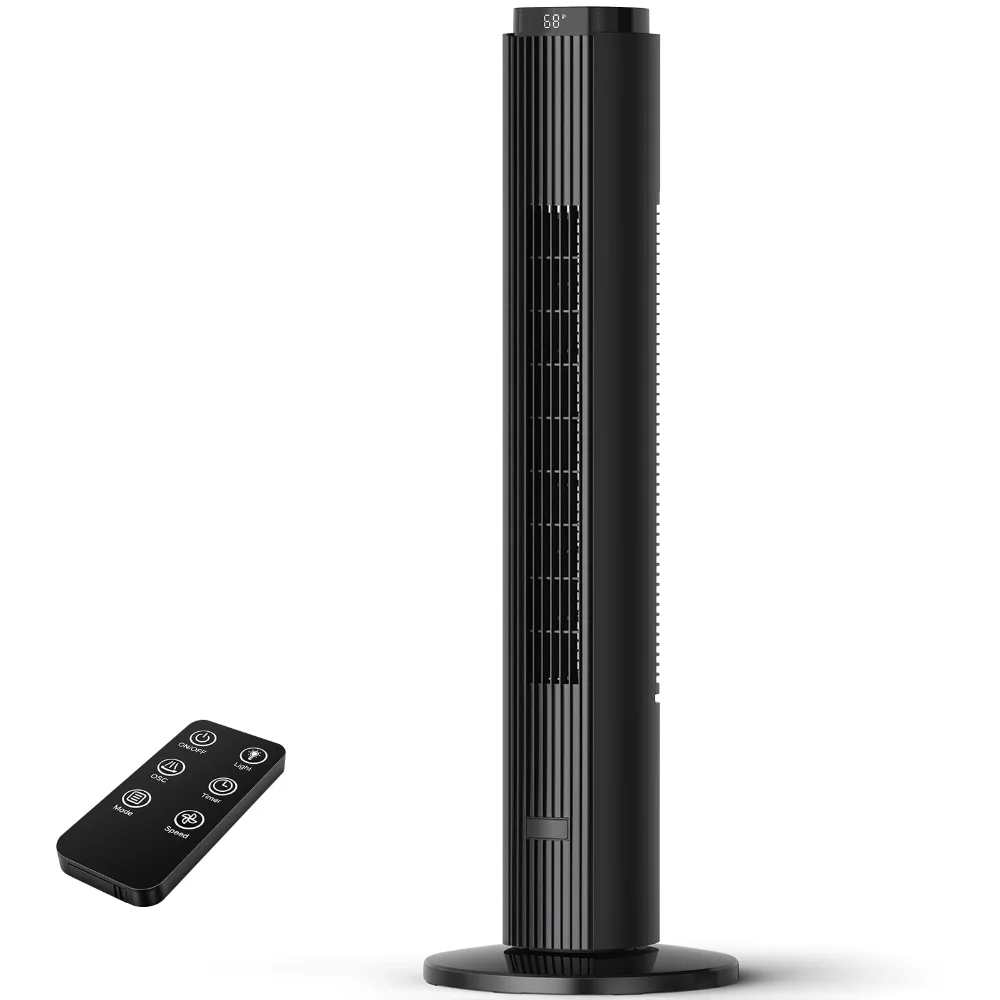
Tower Fan, 23 ft/s, Black
A bladeless tower that throws air 23 feet per second, oscillates 85 degrees and takes a remote. The quiet mode is the one that gets used: most tower fans are bought for bedrooms and judged at two in the morning.
When the problem is damp, not heat
A basement in July, a bathroom without a window, a laundry room in a wet autumn: these rooms do not need cooling. They need water taken out of the air, and a dehumidifier does that job at a fraction of the running cost of an air conditioner, because it is not fighting the outdoor temperature.
The environmental guidance is a useful target. Keep indoor relative humidity below 60 per cent, and ideally between 30 and 50 per cent, and use air conditioners or dehumidifiers to get there. Below 60 per cent, mould has a much harder time establishing itself, dust mites decline, and the room stops smelling of the room.
Dehumidifiers are rated in pints of water a day and in the floor area they can hold at target. Ours run from a 24 pint unit for a 1,200 square foot floor up to an 80 pint compressor machine for 4,500 square feet. The figure to check is not the pint rating on its own but whether the unit takes a drain hose. A 4.8 litre tank is a bucket you have to empty. A hose to a floor drain or a sump makes the machine something you stop thinking about.
Damp, mould and the number to aim at
Relative humidity below 60 per cent, ideally 30 to 50, is the published target for keeping mould out of a home. A hygrometer costs very little and settles the argument about whether a room is actually damp or just feels it.
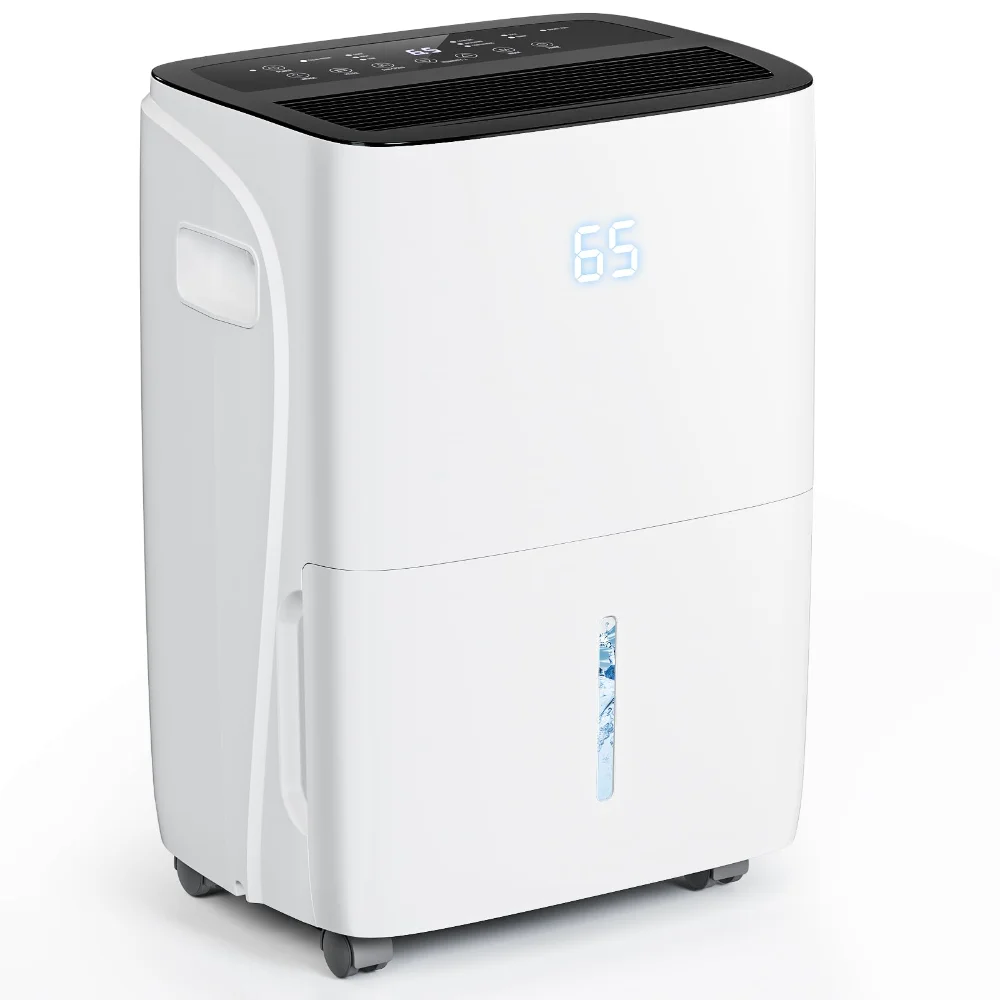
Dehumidifier, 80 pints/day, White
Eighty pints a day across 4,500 square feet with a drain hose, which is the size that suits a basement rather than a bathroom. The hose is the part that matters: a machine you have to empty twice a day is a machine that gets switched off.
And when the problem is the air itself
Neither cooling nor drying does anything about particles. A HEPA purifier does, and the honest framing from the environmental agency is that a portable air cleaner reduces indoor air pollution but cannot remove every pollutant, and that filtration works as a supplement to removing the source and letting clean outdoor air in, not as a replacement for either.
Read that way, a purifier earns its place in a specific set of rooms: a bedroom in pollen season, a flat on a busy road where opening the window is the problem rather than the solution, a room with a pet. Our H13 units are rated by room size, up to 1,110 square feet, and the one specification worth comparing is noise on the lowest setting, because a purifier only helps while it is running.
The same machine, running backwards
A detail worth knowing about our split systems, because it changes what they are worth. An air conditioner does not destroy heat, it moves it: out of the room and into the air outside. Reverse the direction of the refrigerant and the same machine collects heat from the cold air outdoors and delivers it indoors. That is a heat pump, and it is the reason both our wall-mounted splits are described as air conditioner and heater rather than as one or the other.
It sounds implausible that there is useful heat in air at four degrees Celsius, but there is, and moving it is far cheaper than making it. A resistance heater turns one unit of electricity into one unit of heat and can do no better. A heat pump moves several units of heat for each unit of electricity it draws, because it is not manufacturing the heat, only carrying it. That is the whole efficiency argument in one sentence.
For a room that is uncomfortable in August and chilly in March, a split unit does both jobs from one box on one bracket. That is a different proposition from a cooling-only machine that sits idle for eight months.
Putting it together
Most households that think they have a heat problem have one of three problems, and it is worth spending five minutes working out which before spending anything.
- The room is hot. Measure the floor area, take the capacity from the table, and pick the format the window allows. Do not round up two sizes.
- The room is sticky. Buy a hygrometer first. If it reads above 60 per cent, a dehumidifier will change the room more than an air conditioner would.
- The room is stuffy. Moving air and filtering it are different fixes from cooling it, and both cost far less to run.
The whole cooling side of the catalogue is laid out by capacity: air conditioners by BTU, fans by air speed, and dehumidifiers and purifiers by the floor area they hold. If you want to see how the cold and warm halves of the ELECTACTIC range fit together, the scale on the front page runs from a chest freezer at minus forty to a grill burner at forty thousand BTU.
The other two pieces
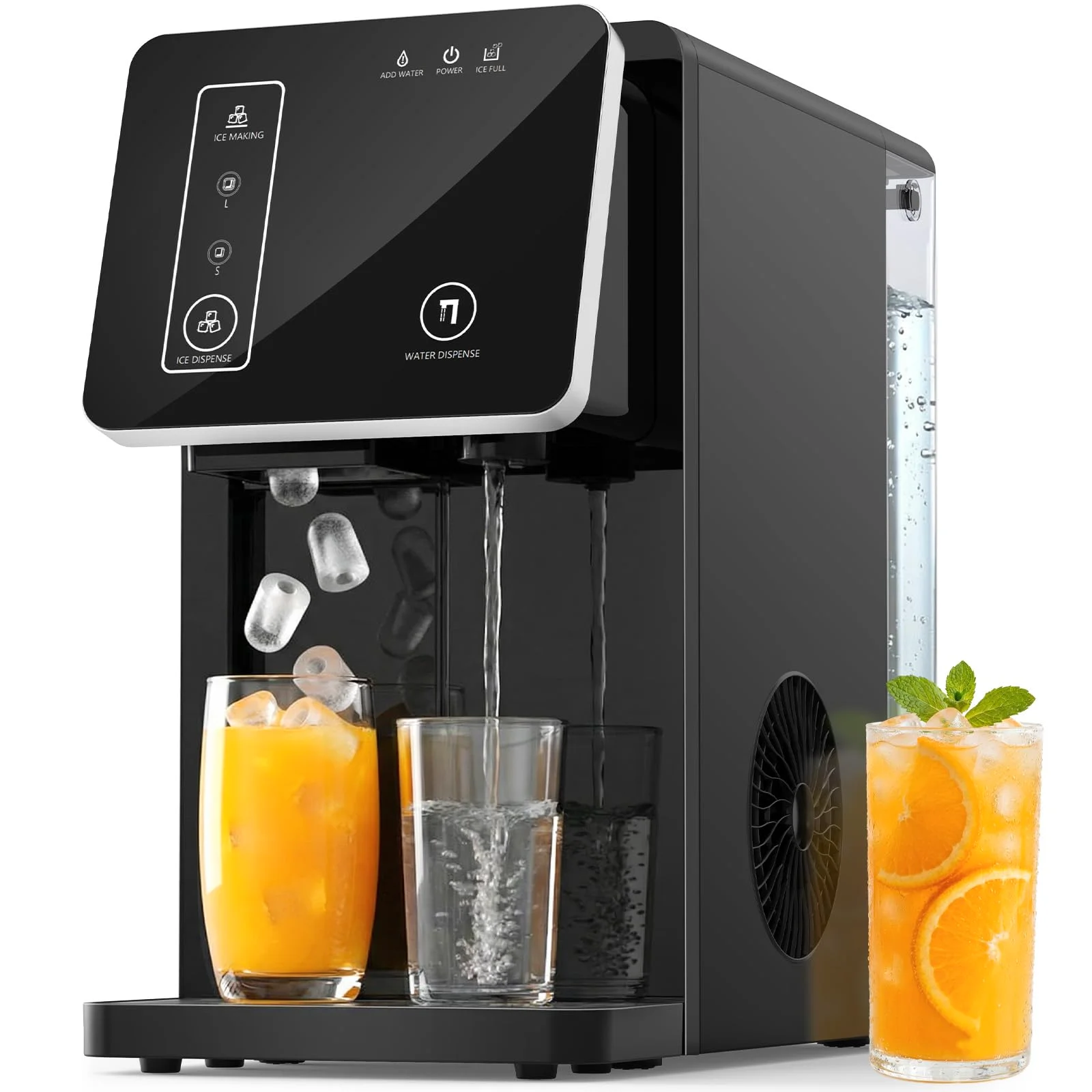
How much ice a house needs
Bullet, nugget, clear cube, sphere, crescent: five kinds of ice, five different machines, and the output rating a kitchen is actually asking for.
11 min read14 September 2026
Warmth where you want it
What a watt buys indoors, what a BTU buys outdoors, why the 1,500 watt ceiling exists, and the safety numbers behind every machine on the warm half of the range.
13 min read14 September 2026