How much ice a house actually needs, and which machine makes it
Bullet, nugget, clear cube, sphere, crescent: five kinds of ice, five different machines, and the output rating a kitchen is actually asking for.
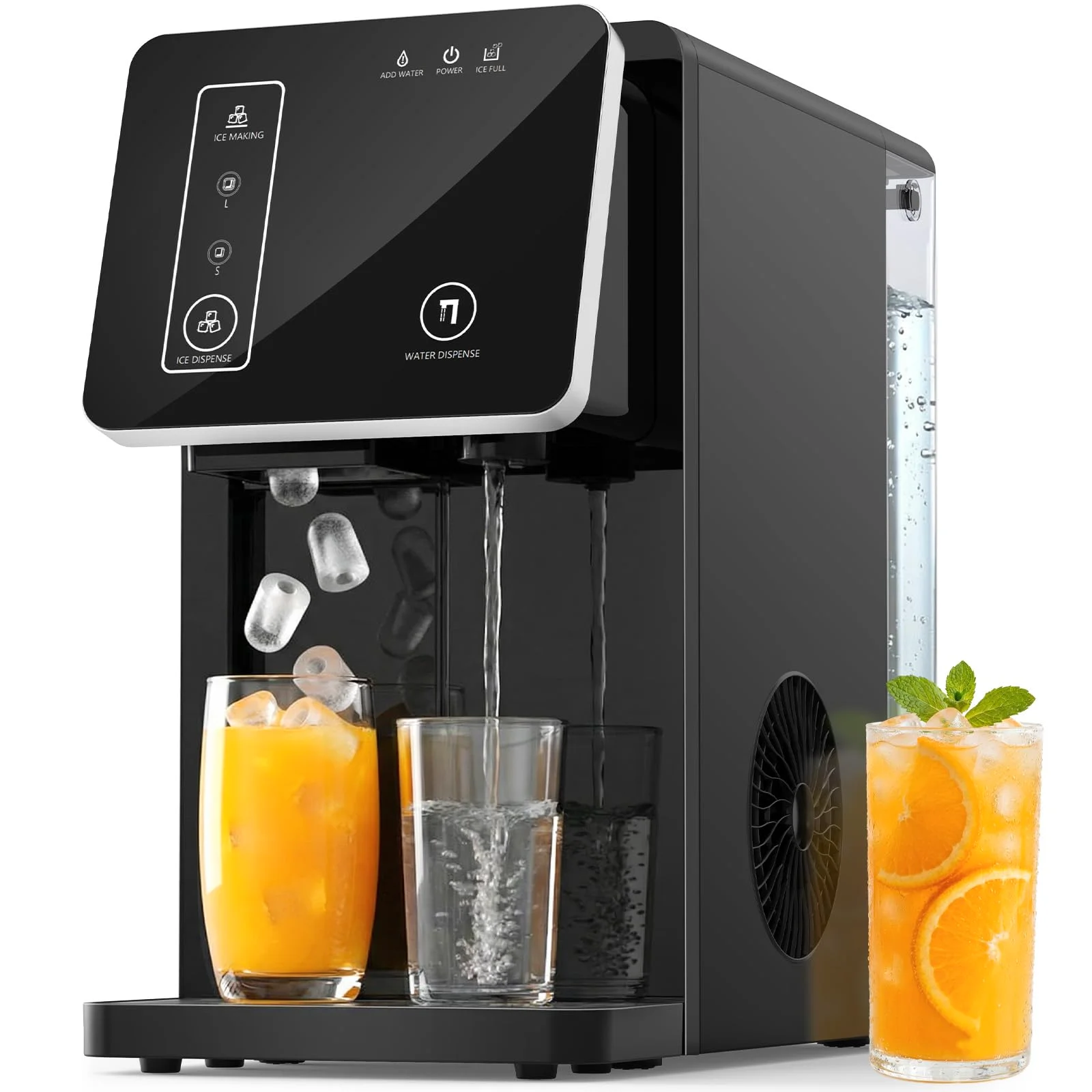
Almost nobody buys an ice maker because they ran the numbers. People buy one after a summer of filling trays, or after a party where the bag from the shop turned into one solid block by nine in the evening. Then the question arrives all at once: which kind of ice, and how much of it, and does the number on the box mean anything.
It does mean something, and it is easier to read than it looks. This is how we think about it when we set out a shelf of machines, and how we would think about it standing in a kitchen with a tape measure.
Five kinds of ice, and what each one is for
The shape of a piece of ice decides three things: how fast it chills a drink, how fast it waters it down, and whether anyone wants to chew it. Everything else about an ice machine follows from which of those three you care about.
Bullet ice is the hollow cylinder that comes out of nearly every countertop machine, ours included. The hollow centre is the point. Water freezes onto a chilled metal finger, which means the piece is thin-walled, made fast, and full of surface area, so it pulls heat out of a drink quickly. It also melts quickly. For a glass of soda or an iced coffee that is exactly right. For a spirit you plan to sit with for an hour, it is not.
Nugget ice is the soft, chewable pellet that people know from hospital canteens and fast food counters. It is made differently: water freezes in a thin sheet inside a cylinder, an auger scrapes the sheet off and compacts the flakes into pellets. Nugget ice traps air, so it is soft enough to bite and it packs into a glass without gaps. It also absorbs whatever it is sitting in. A nugget machine has more parts and costs more, and it matters most to the people who really want it. Our nugget machines run from a 34 lbs a day countertop unit up to a 66 lbs a day undercounter one.
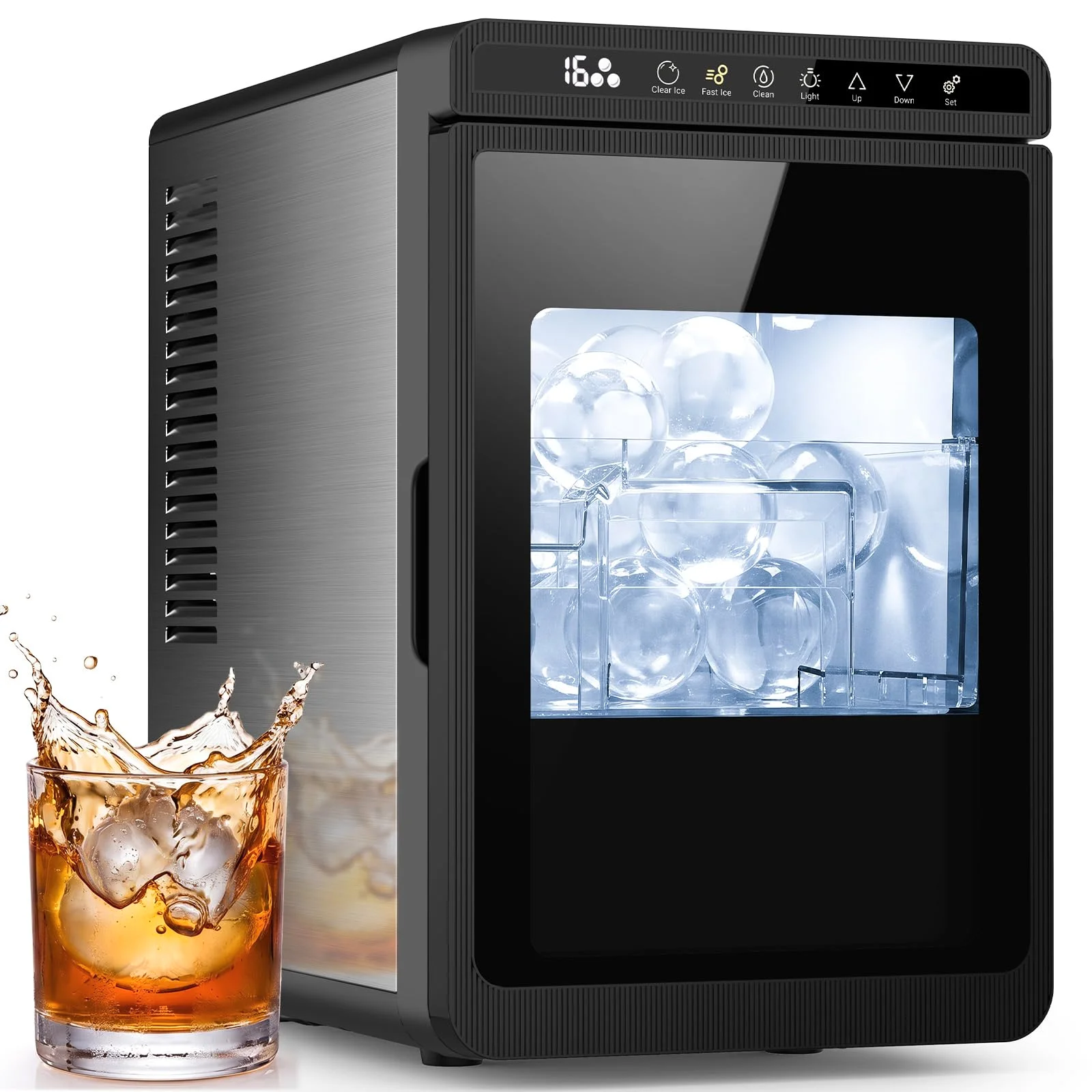
Clear cube ice is the slow one. Cloudiness in ordinary ice is trapped air and dissolved minerals, pushed into the middle of the cube as it freezes from every side at once. Freeze from one direction slowly and the air is driven out ahead of the ice front, and what you get is glass-clear and dense. Density is the whole point: a clear 1.6 inch cube melts far slower than a bullet of the same weight, so a drink stays cold and stays strong. The price is time. One of our clear cube machines makes nine cubes an hour, which is a quarter of the rate of a bullet machine of similar size.
Sphere ice takes that further. A 2.2 inch ball has the least surface area of any shape holding that much water, so it melts slower than anything else you can put in a glass. Our sphere machine makes two at a time in forty minutes and seventy-two in a day. That is a small number until you remember that seventy-two large spheres is more whisky than most households drink in a fortnight.
Crescent ice is the half-moon shape from built-in freezers, and it exists for a mundane reason: the curve stops pieces welding together in the bin, and the flat face lets them stack. Our crescent machine makes sixteen in fifteen minutes and lets you set the thickness, which is the closest thing on the shelf to the ice a built-in unit gives you without cutting a plumbing line into a cabinet.
| Kind | How it is made | Chills | Melts | Best for |
|---|---|---|---|---|
| Bullet | Water freezes on a chilled probe | Fast | Fast | Soda, iced coffee, everyday glasses |
| Nugget | Flakes scraped from a drum and pressed | Fast | Fast | Chewing, packed glasses, iced tea |
| Clear cube | Slow directional freeze, one face at a time | Slow | Very slow | Spirits, cocktails, anything sipped |
| Sphere | Slow freeze in a round mould | Slow | Slowest | A single measure that has to last |
| Crescent | Freezes in a shaped tray, then released | Medium | Medium | A bin of loose ice that will not clump |
Chilling speed and melting speed are the same property read twice: surface area. There is no shape that does both jobs.
What a rating in pounds per day is actually telling you
Every countertop machine carries a figure like 26 lbs / 24h. It is a production rate, not a storage figure, and the difference is the single most useful thing to understand before buying one.
A countertop ice maker has no freezer in it. The basket is insulated and nothing more. Ice sitting in that basket melts, and the meltwater drains back into the reservoir, where it is made into ice again. Nothing is wasted, but nothing is stored either. A machine rated at 26 lbs a day will not hand you 26 lbs at nine in the morning. It will hand you a basket, and then keep refilling it all day if you keep taking ice out.
So read the rating as a tap, not a tank. Twenty-six pounds over twenty-four hours is a little over a pound an hour. A tall glass packed with ice holds roughly half a pound. That means a 26 lbs a day machine keeps up with about two full glasses an hour, indefinitely, which is more than a household of four will normally ask of it.
Read the rating as a tap, not a tank. A countertop machine has no freezer in it, and the basket is insulated storage at best.
The other number worth reading is the batch time. Our bullet machines put out eight or nine pieces in six minutes. One of the larger-cube models takes thirteen minutes for twelve. Batch time is what you feel when you walk up to an empty machine and want a drink now. Daily output is what you feel at four in the afternoon on the second day of a heatwave.
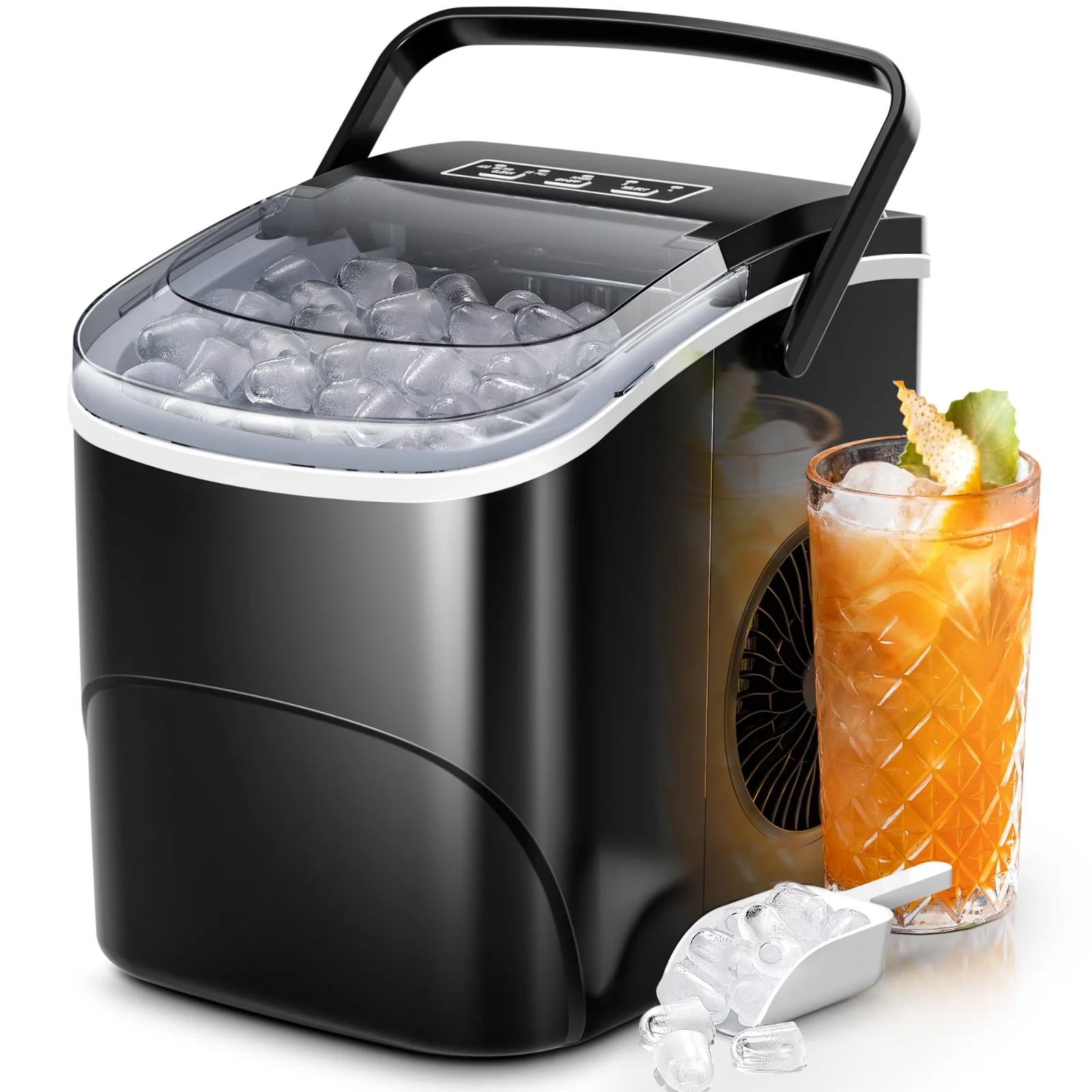
Countertop Ice Maker, 26 lbs/24h, Black
Nine bullet pieces in six minutes, 26 lbs across a day, a self-cleaning cycle and a lid you can see through. If you have never owned an ice maker, this is the shape the answer usually takes.

Sizing it for your own house
Here is the arithmetic we use, written out so you can disagree with it. A tall glass of iced drink takes about half a pound of ice. Most people who drink cold drinks at home have three or four of them across a day. That is roughly a pound and a half to two pounds of ice per person per day, and it is a generous estimate, because half those drinks are poured over ice that is already in the glass from the last one.
On that basis a household of two needs three to four pounds a day, a household of four needs six to eight, and the smallest machine on our shelf, rated at 18 lbs a day, already has more than double the headroom either of them will use. Which raises the obvious question: why buy anything bigger?
Two reasons, and neither is everyday drinking. The first is peaks. A barbecue for twelve people is not four glasses spread across a day, it is thirty pounds of ice wanted between two and six in the afternoon, and a machine that produces a pound an hour cannot invent it. The second is warm rooms. Every production figure printed on an ice maker is measured in a cool room with cool water. Fill the reservoir from a hot tap in a kitchen at thirty degrees Celsius and real output drops, sometimes by a third. A machine sized with no headroom is a machine that disappoints in exactly the weather you bought it for.
| Household | Everyday demand | Rating we would choose | Why |
|---|---|---|---|
| One or two people | About 3 lbs a day | 18 to 26 lbs a day | Smallest footprint, six minute batches, plenty of headroom |
| Family of four | 6 to 8 lbs a day | 26 to 35 lbs a day | Keeps up through an afternoon without anyone waiting |
| Regular entertaining | 20 to 35 lbs on the day | 35 lbs a day, or a second machine | Peaks matter more than averages |
| Home bar, spirits | A handful of pieces | Clear cube or sphere | Density beats volume; nine cubes an hour is enough |
| Garage, workshop, small venue | 50 lbs and up | 80 to 100 lbs a day | Undercounter machines with a timer, built to run all day |
Everyday demand assumes half a pound of ice per tall glass and three to four cold drinks per person per day.
Water, tanks and the part nobody thinks about
An ice maker is a water appliance that happens to get cold, and most of the complaints people have about them are water complaints. Three things are worth checking before you buy.
Tank size and how you fill it. A 0.8 litre reservoir is quick to fill and quick to empty. Two litres, split across a dual tank as on several of our machines, means fewer trips to the sink and a longer unattended run. One of our units takes an external bottle instead, which is the right answer if the machine is going somewhere without a tap nearby.
The low water warning. Every machine we sell has one, and it matters more than it sounds. An ice maker that runs dry does not break, but it does spend an hour cycling and producing nothing, and you find out when you open an empty basket.
Cleaning. Ice is food, and the machine that makes it is a food surface. Our machines have a self-clean cycle, which circulates water through the loop and drains it. It takes the biofilm off but it is not a descaler. In a hard water area the scale is the thing that eventually slows a machine down, and that wants a proper descaling sachet two or three times a year.
Treat ice like food, because it is
Use drinking water, empty the reservoir if the machine is going to stand unused, and keep the basket dry rather than full. The federal guidance on cold food gives the number to hold on to: bacteria multiply fastest between 40 and 140 degrees Fahrenheit, and a warm reservoir of standing water sits squarely in that band.
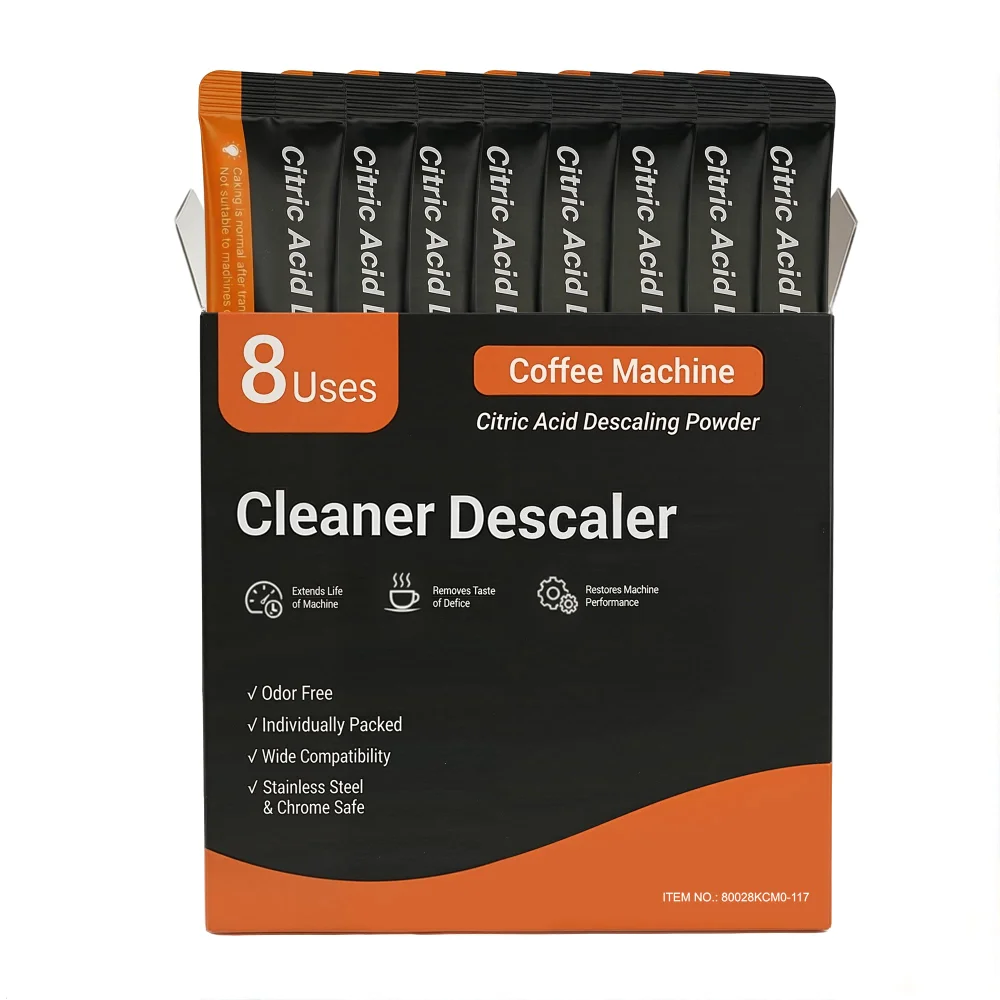
Descaler & Cleaner, White
Eight individually packed sachets of descaler, which is roughly two years of servicing for one machine in a hard water area. It works on an espresso machine as well, which is where most households first meet limescale.
The first week with a new machine
Two things surprise people in the first few days, and neither is a fault.
The first batches are usually thin, cloudy and slightly odd tasting. A new machine has a dry loop, plastic that has never had water through it and an evaporator that has not reached working temperature. The standard advice is to run two or three batches and throw them away, and it is worth doing even though it feels wasteful. After that the pieces come out at full size and taste of nothing, which is what ice is supposed to taste of.
The second surprise is the noise pattern. A countertop machine is not a continuous hum. It is quiet for five minutes, then there is a clatter as a batch drops into the basket, then it starts again. People who put one on a kitchen island near a sofa often move it after a week, which is a good argument for deciding where it lives before you buy the tallest one.
Power draw is modest and worth knowing. A countertop machine of this size runs at somewhere around 100 to 150 watts while it is making ice, which is comparable to a bright old-fashioned light bulb, and it draws nothing at all once the basket is full and the sensor stops it. A machine left running all day in an empty kitchen is not an expensive mistake, but it is a pointless one: the ice melts back and gets remade, and you pay for the same water twice.
Is nugget ice worth the extra money?
A nugget machine costs about twice what a bullet machine of the same output costs, and the honest answer is that it depends entirely on whether you are one of the people who likes chewing ice. Those people are not a small group, and they are not persuadable by arithmetic. If you are one of them, nothing else on the shelf will do.
There are two practical arguments beyond preference. Nugget ice packs into a glass with almost no air gaps, so a given glass holds more ice and less drink, and it chills faster because there is more ice surface in contact with the liquid. And it is kinder to blenders and to teeth. Against that: an auger machine has a moving part in the cold section, it takes longer to make the first batch, and it needs the reservoir emptying more often because soft ice melts back faster.
Our nugget line starts at 34 lbs a day on the counter and runs to a 66 lbs a day undercounter machine with a built-in bin. Between them sits the 35 lbs a day model that most people buy, ready in about seven minutes from a cold start. You can see the whole line on the ice maker shelf, and the rest of the cold side of the ELECTACTIC range sits one click along from it.
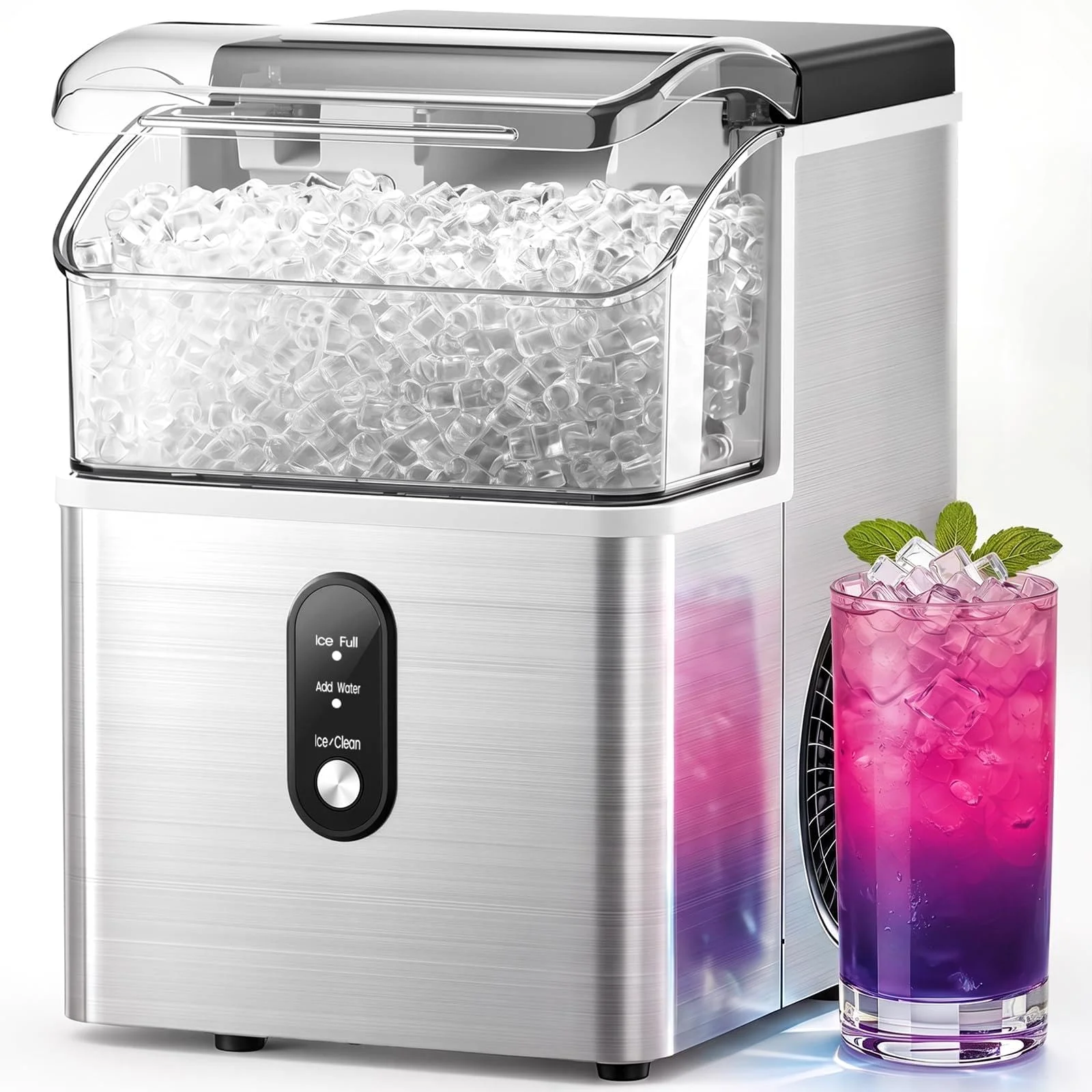
Nugget Ice Maker, 35 lbs/24h, Stainless Steel
Thirty-five pounds a day of chewable pellet ice, first batch in about seven minutes, with a self-cleaning cycle. This is the machine people mean when they say they want the ice from the hospital canteen.
Clear ice, and why it takes so long
The physics is worth a paragraph because it explains the price. In an ordinary ice tray, water freezes inward from all six faces at once. Dissolved air and minerals cannot escape, so they concentrate in the middle and freeze as a white cloud. The cube is also full of tiny fracture planes, and those are what crack when you pour spirit over it.
Directional freezing solves it by only chilling one face. The ice front advances slowly through the water and pushes the air ahead of it, so the finished piece is clear, dense and quiet in the glass. Slowly is the operative word. Our clear cube machine produces nine 1.6 inch cubes an hour and holds a timer so you can have it work overnight. The sphere machine is slower still: two 2.2 inch balls in forty minutes.
Both machines suit the same person, and it is not the person who drinks a lot of cold drinks. It is the person who makes two or three drinks in an evening and wants the last mouthful to taste like the first.
Where the machine goes
Three practical constraints, in the order people discover them.
- Height under the cupboard. Countertop machines are tall and the lid opens upward. Measure from the worktop to the underside of the wall unit, not just the footprint.
- Air at the back and sides. The condenser throws heat out somewhere, usually the back. Pressed against a wall the machine runs hotter, works harder and makes less. A hand span is enough.
- A drain plug you can reach. Every machine has one underneath. If it lives in a corner you will not empty it, and a reservoir that never gets emptied is the reason people think ice makers smell.
Noise is worth a word too. A compressor machine is about as loud as a small fridge, with one addition: ice falling into the basket. If the machine is going into an open-plan room where someone works, that repeated clatter every six minutes is the thing they will notice, not the compressor.
When to step up to an undercounter machine
Our 80 and 100 lbs a day machines are a different class of object. They are taller, heavier, built to run continuously rather than in bursts, and they carry a 24 hour timer so they can make their day quota overnight and idle while you are using it. They are the right answer for a garage bar, a small cafe counter, a workshop, or a household that genuinely entertains most weekends.
They are the wrong answer for a kitchen where the honest daily demand is six pounds. A larger machine does not make small amounts of ice more efficiently. It makes large amounts of ice, and if nobody takes the ice out, it melts back and gets made again. The energy for that comes from your wall socket.
The short version
- Pick the shape first. Bullet for everyday cold drinks, nugget for chewing, clear cube or sphere for spirits, crescent for a bin of loose ice.
- Read the rating as production per day, not storage. Half a pound of ice per tall glass is the conversion.
- Size for your peak, not your average, and leave headroom for a warm kitchen.
- Check tank size, low water warning and how easily you can reach the drain plug.
- A self-clean cycle is not a descaler. In hard water, descale two or three times a year.
If you would rather compare the machines themselves than the theory, the ice makers are all on one page with their output, batch time and finish on the card, and the coolers that keep the drinks cold before the ice goes in are on the beverage cooler shelf.
The other two pieces
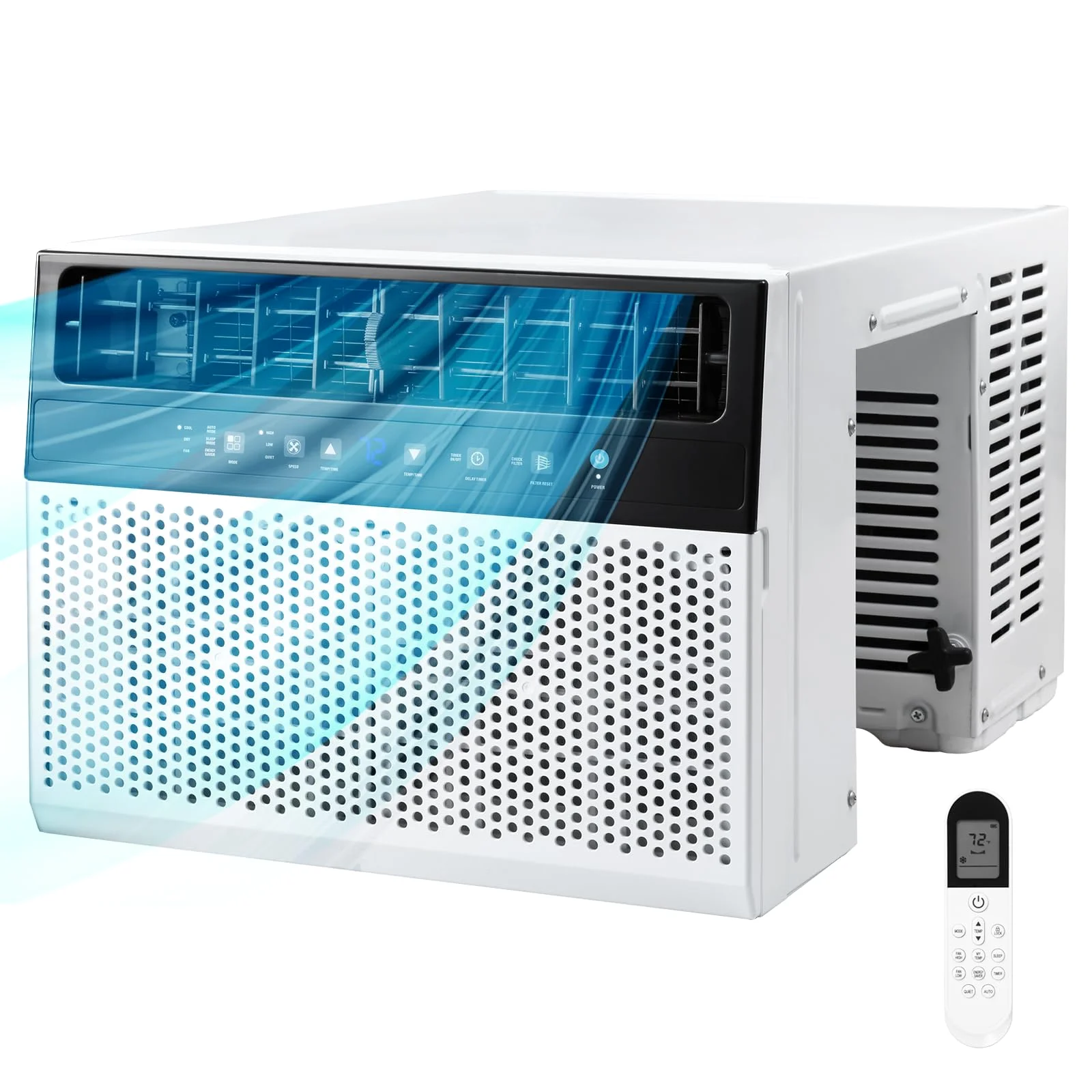
Sizing a cooling machine
Window, saddle, portable or split, and how many BTU a room really needs. Why an oversized unit leaves a room clammy, when a fan is enough, and when the problem is damp rather than heat.
12 min read14 September 2026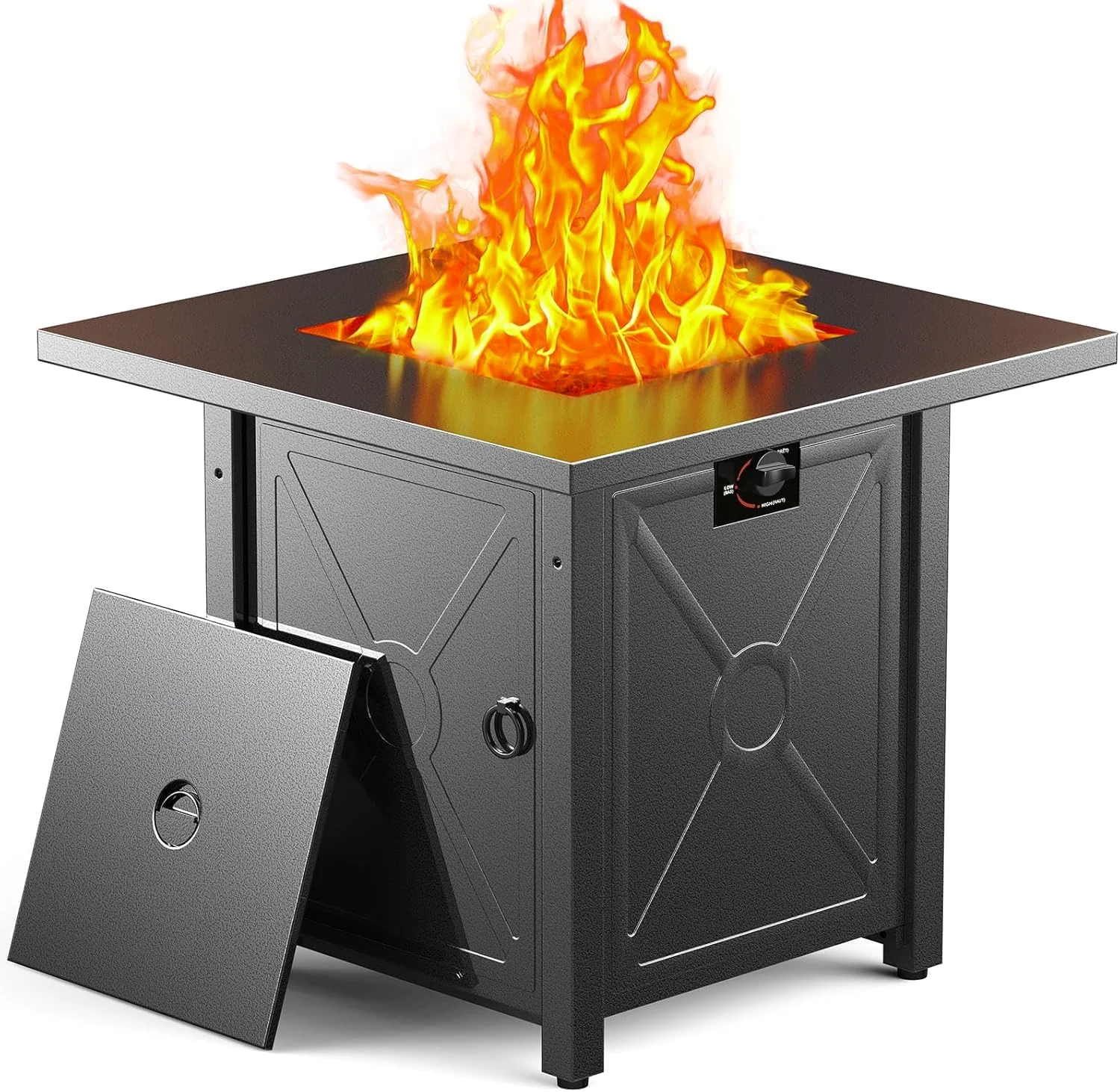
Warmth where you want it
What a watt buys indoors, what a BTU buys outdoors, why the 1,500 watt ceiling exists, and the safety numbers behind every machine on the warm half of the range.
13 min read14 September 2026